Quality service since 1995



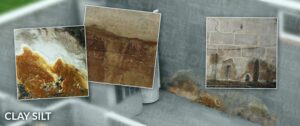
There are many warning signs to look out for to see if you have a leaky basement. Although the type of soil that your building foundations sit on is not a problem in itself, some types of soil can actually be more detrimental to the stability of your property than others, and can cause damp in your basement.
When your home is first built, soil will expand and contract until it reaches a point where it will sit relatively still. This process is known as settling, and can last for several years. If your foundations sit on clay and silt soil, then you are more likely to experience issues as your home settles.
If your home settles irregularly, then you may see signs of damage to your foundations. Sometimes this damage is superficial, but settling can actually cause serious structural problems if the shifts are too extreme, and this is more likely to be the case with clay and silt soil.
You may see cracked dry wall, fractured floors in your basement, your windows and doors might not quite sit plush with their frames, the walls of your basement could be cracked, and pipes can burst. This can also cause leaks and damp, as water finds its way in through weak points, and is pushed up by hydrostatic pressure.

If you want to have your soil tested, you may be able to use a DIY soil tester kit in order to find out what your soil sits on, but be sure to test at the level that your basement foundations sit on. Alternatively, you can hire a specialist, such as a soil engineer. Otherwise, just look out for signs that your home has settled badly.
Soil absorbs water, and as it does so it tends to expand. When it dries again, the soil will contract, and shrink back down. The type of soil that your home is settling on can have a huge impact on this process.
Clay soil has the finest particles, and therefore absorbs water, expands, and contracts the most out of any soil. Silt also does this, but not to the same extent. If your soil is mostly clay and silt, then your home could settle unevenly.
Different parts of your home can be elevated and shift day by day. Although this shift is only minor, over time it can cause very real problems. If damage occurs, such as cracks in the floor and walls, water could find its way into your home, and you could end up with a damp basement.
The most serious problem is if structural damage occurs, in which foundations experience enough of a shift that the building itself becomes unstable. In this case, foundation repair is needed.
What Solutions Are Available?

You might not be able to change the type of soil under your home, but the settling process doesn’t last forever. Even if you have clay and silt soil, you can repair any damage that is done, and reinforce the foundations if needed.
Direct Waterproofing offer advice on your soil and the settling process, and we have solutions at hand to make sure any damage is repaired, and to minimize the amount of water that soaks into the ground around your home.
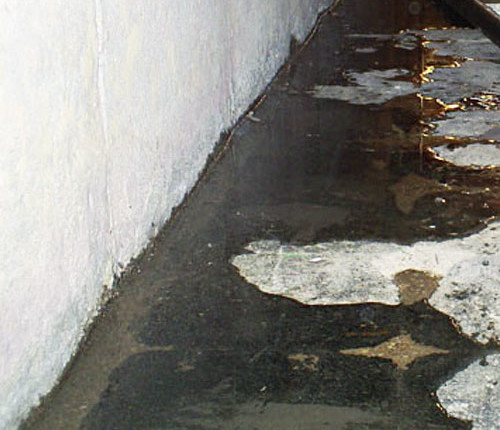 Cove Joint
Cove joint seepage usually occurs due to hydrostatic pressure. This is where ground water along your foundation walls and underneath your floor rises, and seeps upwards.
Read more
Cove Joint
Cove joint seepage usually occurs due to hydrostatic pressure. This is where ground water along your foundation walls and underneath your floor rises, and seeps upwards.
Read more
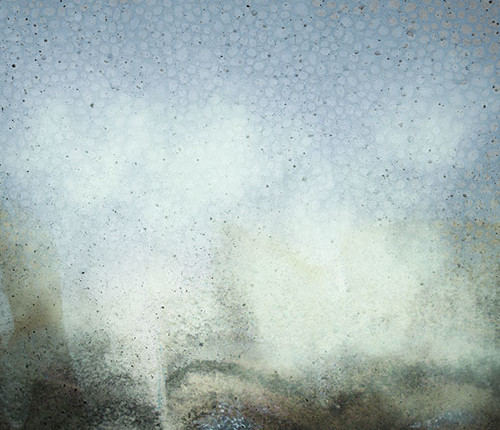 Damp and humid air
You might first notice the smell if the air in your basement is damp and humid. There will be a heavy pungent smell, accompanied by a feeling of the air being thicker than it should be.
Read more
Damp and humid air
You might first notice the smell if the air in your basement is damp and humid. There will be a heavy pungent smell, accompanied by a feeling of the air being thicker than it should be.
Read more
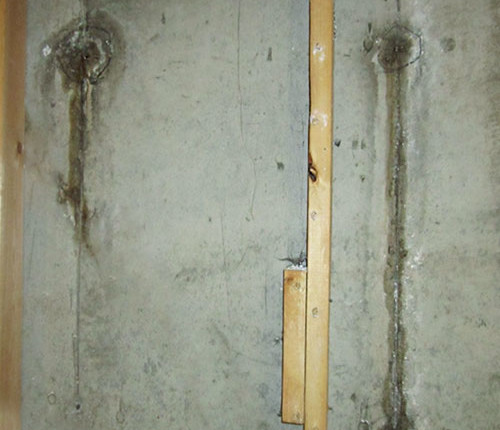 Tie Rod
If your tie rod holes are leaking, then you might see a small stain about the size of a coin on the inside of your basement walls, or a water line that leaks all the way down to the floor.
Read more
Tie Rod
If your tie rod holes are leaking, then you might see a small stain about the size of a coin on the inside of your basement walls, or a water line that leaks all the way down to the floor.
Read more


