Quality service since 1995



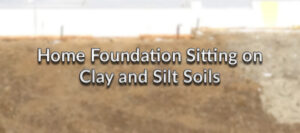
The type of soil your foundation is built on may not be the big issue. However, some types of soil may be harmful to the stability of your house than others, and can result in dampness in your basement.
When you build a house for the first time, soil will contract and expand to a certain point where it will sit still. This is a process called settling, and can go on for many years. If your building’s foundations sit on silt or clay soil, you are more prone to leaking problems as your house settles.
Signs of your foundation being damaged from water may be easily seen if your home does not settle regularly. The damage can sometimes be shallow, but settling can cause serious structural concerns if the shifts are too dangerous, and this is usually the case with silt and clay soil.
Fractured floors and cracked dry walls may be seen, and your doors and windows may not sit well within their frames. Your basement wall may be cracked and also pipes may burst. This will result in damp and leaks, as water has to trace its path through weak points, assisted by hydrostatic pressure.
If you wish to test your soil, a DIY soil tester can be used to find out what type of soil your foundation sits on, but ensure that you test at the level of the foundation itself. Another way is to hire a professional, like a soil engineer. Otherwise, you can observe the signs of soil settling in your home. You may also call us at Direct Waterproofing to offer our expertise help.
When soil absorbs water, it expands. When it dries up, it contracts and shrinks back. The type of soil you choose to build on has a huge impact on this process. Clay soil has very fine particles, and therefore, it expands and contracts the most. Silt soil also has fine particles, but does not expand and contract as much as clay soil. If your foundation is built on clay and silt, your house will settle unevenly.
Different areas in your home are shifted and elevated every day. Although this movement is minor, with time it raises concern. If damage such as cracks in the walls and floors occurs, water will find a way into your house, and you may end up with dampness in your basement and exterior waterproofing may be a solution once will need to consider.
The most serious concern is when there is structural damage. In this case, foundations experience too much shift that the stability of the building is questioned. In such instances, the foundation needs to be repaired. Direct Waterproofing comes in handy when you have issues of basement and foundation leaks due to settling of soils.
Changing the type of soil in your property may not be possible. However, the settling process does not continue forever. If your home sits on clay and silt soil, any damages done can be repaired, and the foundations reinforced if needed. Direct Waterproofing will advise you on the soil settling process and recommend solutions that will ensure that all the damage is repaired.
 Going Green: Taking
Environmental
Responsibility
Whatever the business one is in, one must always comply with environmental conditions. A business that has a good environmental management policy is almost always at the front of the profitability line.
Read more
Going Green: Taking
Environmental
Responsibility
Whatever the business one is in, one must always comply with environmental conditions. A business that has a good environmental management policy is almost always at the front of the profitability line.
Read more
 Handling a Leaky
Basement Repair
When it comes to our homes, there are two floors in particular that rarely seem to be visited or inspected. One of these is the attic.
Read more
Handling a Leaky
Basement Repair
When it comes to our homes, there are two floors in particular that rarely seem to be visited or inspected. One of these is the attic.
Read more
 Planning Ahead
For Emergency
Basement Flooding
Planning ahead for basement waterproofing Toronto and emergency basement flooding is of paramount importance. That is, at least, if you value your hard-earned money.
Read more
Planning Ahead
For Emergency
Basement Flooding
Planning ahead for basement waterproofing Toronto and emergency basement flooding is of paramount importance. That is, at least, if you value your hard-earned money.
Read more


