Quality service since 1995



Inside basement waterproofing is an alternative way of waterproofing your basement. Sometimes the houses are built too close to each other and make it impossible to properly waterproof outside the walls. In these cases we install a membrane on the inside of the basement wall and put in a sump pump.
Learn more about Backwater Valve
Direct Waterproofing team begins the process by breaking and digging out the floor outside the wall that needs to be waterproofed.
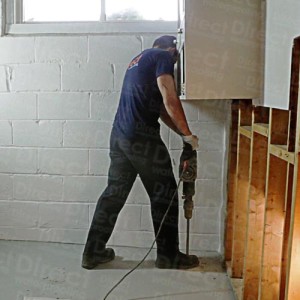
Than we excavate along the exterior of the wall to the footing – the trench is usually 9 to 12 inches deep.
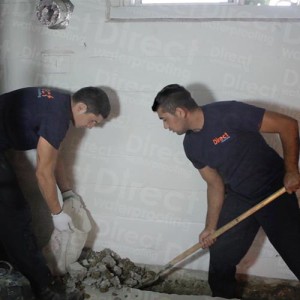
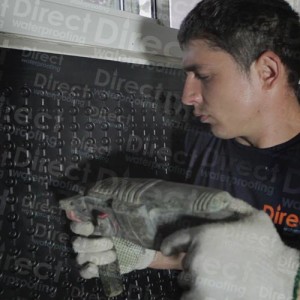
Drain holes are drilled into the block so the water can make it’s way through the block and into the drain system.
We install the membrane over the wall which acts as a barrier and prevents the water from leaking into the basement by channelling the water that comes through the wall into the weeping tile.
A weeping tile is installed in the trench in such a way that it is lower than the floor – any water that comes through the wall will accumulate into the tile and also drain any water that accumulates under the footing of the house and beneath floors of the basement.
The weeping tile is than connected to the sump pump that is installed at the bottom of the sump tank.
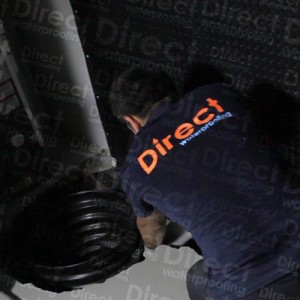
A discharge pipe is than connected to the sump pump and channelled outside the house. Once all the components are installed, the trench is covered with 3/4’s gravel, and cement is poured on top of it, level with the floor.
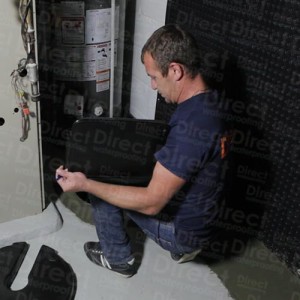
Once the job is complete, a Direct Waterproofing manager will inspect the job site, and make sure the job is done right.
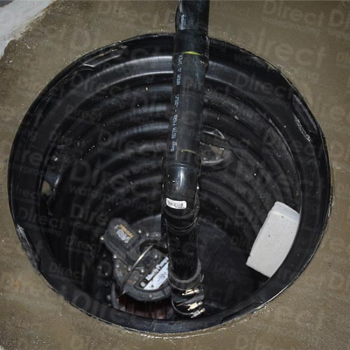 Case: Sump Pump
Installation
This case study on a sump pump installation outlines the basic procedure to properly install a sump pump inside the basement. From the inital steps of cutting a hole in concrete floor to finally connecting the PVC pipe into the discharge of the pump and pumping the water out through foundation wall.
Read more
Case: Sump Pump
Installation
This case study on a sump pump installation outlines the basic procedure to properly install a sump pump inside the basement. From the inital steps of cutting a hole in concrete floor to finally connecting the PVC pipe into the discharge of the pump and pumping the water out through foundation wall.
Read more
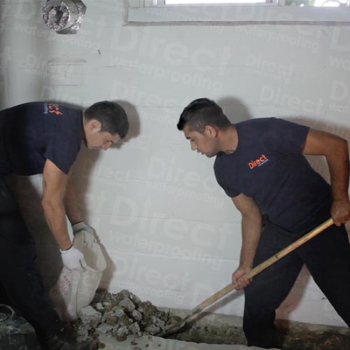 Case: Interior
Waterproofing
Inside basement waterproofing is an alternative way of waterproofing your basement. Sometimes the houses are built too close to each other and make it impossible to properly waterproof outside the walls. In these cases we install a membrane on the inside of the basement wall and put in a sump pump.
Read more
Case: Interior
Waterproofing
Inside basement waterproofing is an alternative way of waterproofing your basement. Sometimes the houses are built too close to each other and make it impossible to properly waterproof outside the walls. In these cases we install a membrane on the inside of the basement wall and put in a sump pump.
Read more
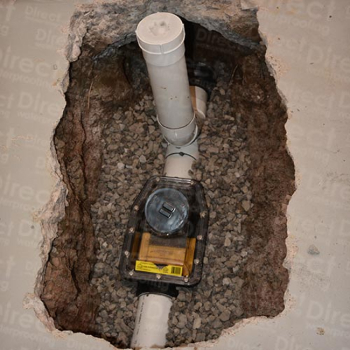 Case Study: BackwaterValve Installation
In this case study we are going to demonstrate how the Direct Waterproofing team approaches a Backwater Valve Installation. In the recent years Toronto has been experiencing very heavy rains, which have caused the municipal sewer system to back up through the sewer drains of homes and properties.
Read more
Case Study: BackwaterValve Installation
In this case study we are going to demonstrate how the Direct Waterproofing team approaches a Backwater Valve Installation. In the recent years Toronto has been experiencing very heavy rains, which have caused the municipal sewer system to back up through the sewer drains of homes and properties.
Read more


